
FRANTOIO DEI PLACIDA INGLESE
0:002:16
In the silence of the Placida Oil Mill in Sellìa, the soul of a community still lives on, where fieldwork met the miracle of electricity to turn farmers' sacrifices into pure liquid gold.
Useful information
OPEN BY RESERVATION 327 216 9191
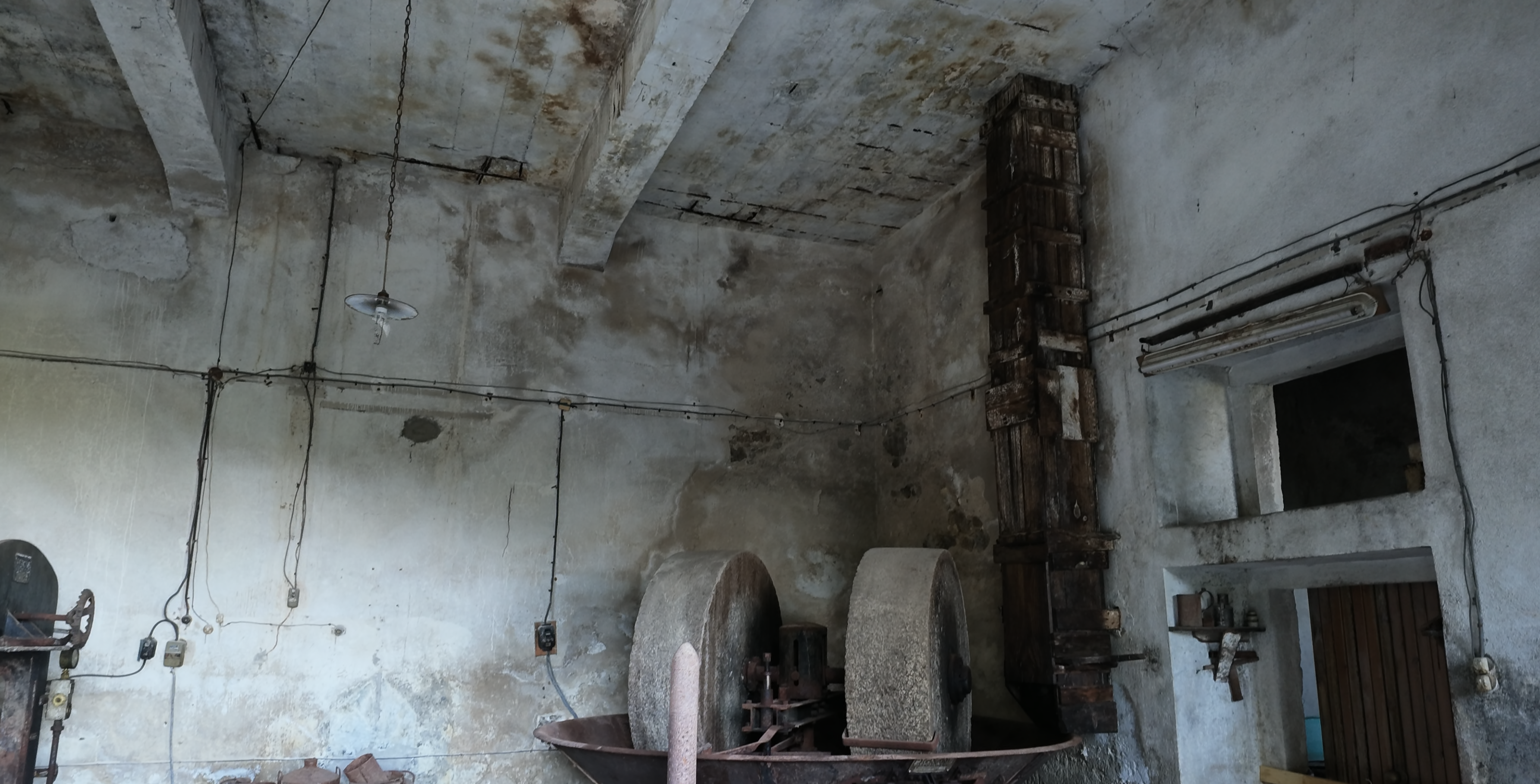
There are places that time seems to have forgotten, silent guardians of a memory at risk of fading, but which today in Sellìa open the doors to one of the most precious secrets of our village. The Placida Oil Mill used to tell, and still tells, the deep life of the community of Sellìa: once these rooms vibrated with activity and footsteps, with farmers arriving tired after long days of work in the fields, yet deeply proud to pour their harvest into the large numbered basins, the so-called "olivare", where each number represented a distinctive mark of recognition and protection to safeguard the fruit of a whole year of hard work and sacrifice. When their turn came, the process came to life and the olives were slid through a hole in the floor, dropping directly down into the operational heart of the mill where the magic of transformation took place. This building represented a fundamental turning point for local history, being one of the first electrically powered oil mills in the village, and one can still imagine the dull, majestic thundering of the enormous stone millstones starting up to crush the fruit. Once the olive paste was obtained, it was carefully arranged inside traditional woven baskets called coffe, stacked and placed under the massive presses where, under powerful and constant pressure, the miracle of extraction unfolded, sending an abundant stream of oil and vegetation water flowing into the decantation tanks. In these tanks, thanks to the natural principle of flotation, the oil, lighter than water, gradually rose to the surface, ready to be collected in all its purity. Today silence reigns in these rooms, but you need only pause for a moment to still catch the intense aroma of freshly pressed oil and hear the living echo of a community that, around these very stones and machines, gathered and wrote its history.
FRANTOIO DEI PLACIDA INGLESE
 1 / 4
1 / 4