
frantoio del diavolo inglese
0:003:10
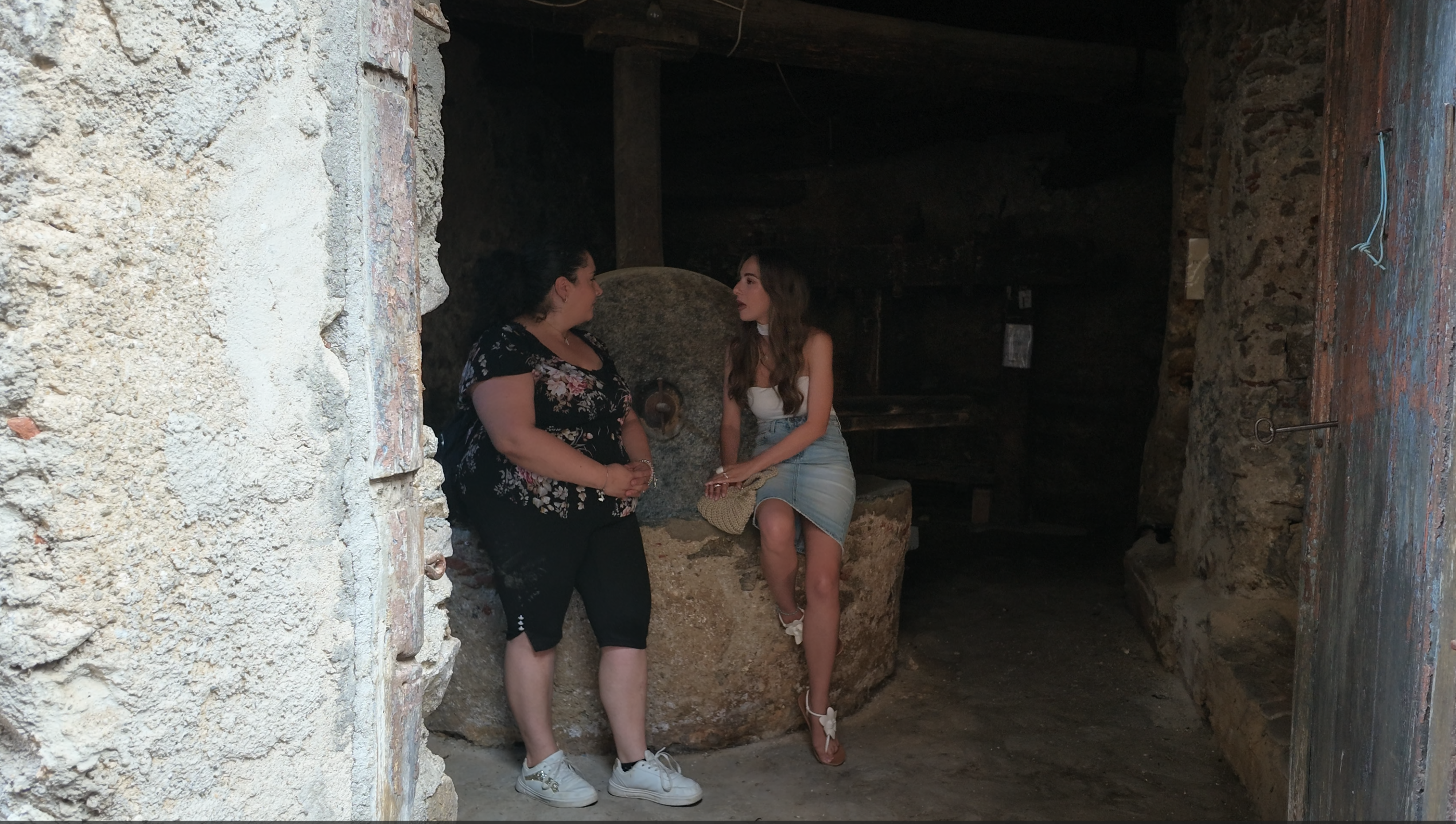
Within the suffocating walls of the Devil's Olive Mill in Sellìa, light never entered and breath was hard to find, yet the men kept pushing those gigantic stones with their bare hands, consuming their bodies in the dark to transform an unspeakable pain into the liquid gold of the earth.
In the heart of the medieval village of Sellìa, perched high in the Catanzaro Presila hills, the olive harvest season brought not only the promise of liquid gold, but also the looming shadow of a foretold torment. Among the narrow alleyways and stone houses, there was a place no one called by its official name: to everyone, it was simply "The Devil's Olive Mill." No folk legends or demonic apparitions were needed to justify such a name, as stepping across its threshold was enough to realize that hell truly lay beneath the earth. The structure was an underground chamber carved directly into the rock, designed to trap the heat required for oil separation, but what aided the yield of the fruit ended up destroying the men. The inner space was suffocatingly tight and narrow, with low ceilings weighing heavily on the workers' shoulders and stone walls glistening with a greasy film of condensation mixed with lamp smoke and steam from the vats. Inside, the air was dense, scorching, and nearly devoid of oxygen, forcing lungs to draw in a burning mixture of pomace smoke, humidity, and sweat. While in most traditional mills the heavy stone millstone was turned by donkeys or mules, at the Devil's Olive Mill using animals was entirely impossible due to the extraordinarily cramped space that left no room to maneuver. The driving force was therefore entrusted entirely to human flesh: workers were harnessed to large wooden beams attached to the axle of the grinding stone and, barefoot or with rags tied as best they could to avoid slipping on the floor made slick by olive juice, had to manually push the heavy granite stone. Trapped under a ceiling too low to allow standing upright, the men pushed with bent backs and shoulders raw from the rough wood, enduring grueling shifts day and night in a darkness dimly lit by fire. The nickname was born precisely from the desperation of those who, emerging exhausted from that hole in the rock at the end of their shift, felt as though they had suffered an infernal punishment, leaving Sellìa today with an indelible testament to the inhuman price survival once demanded.
frantoio del diavolo inglese
 1 / 2
1 / 2