chiesa di san nicola inglese
0:001:58
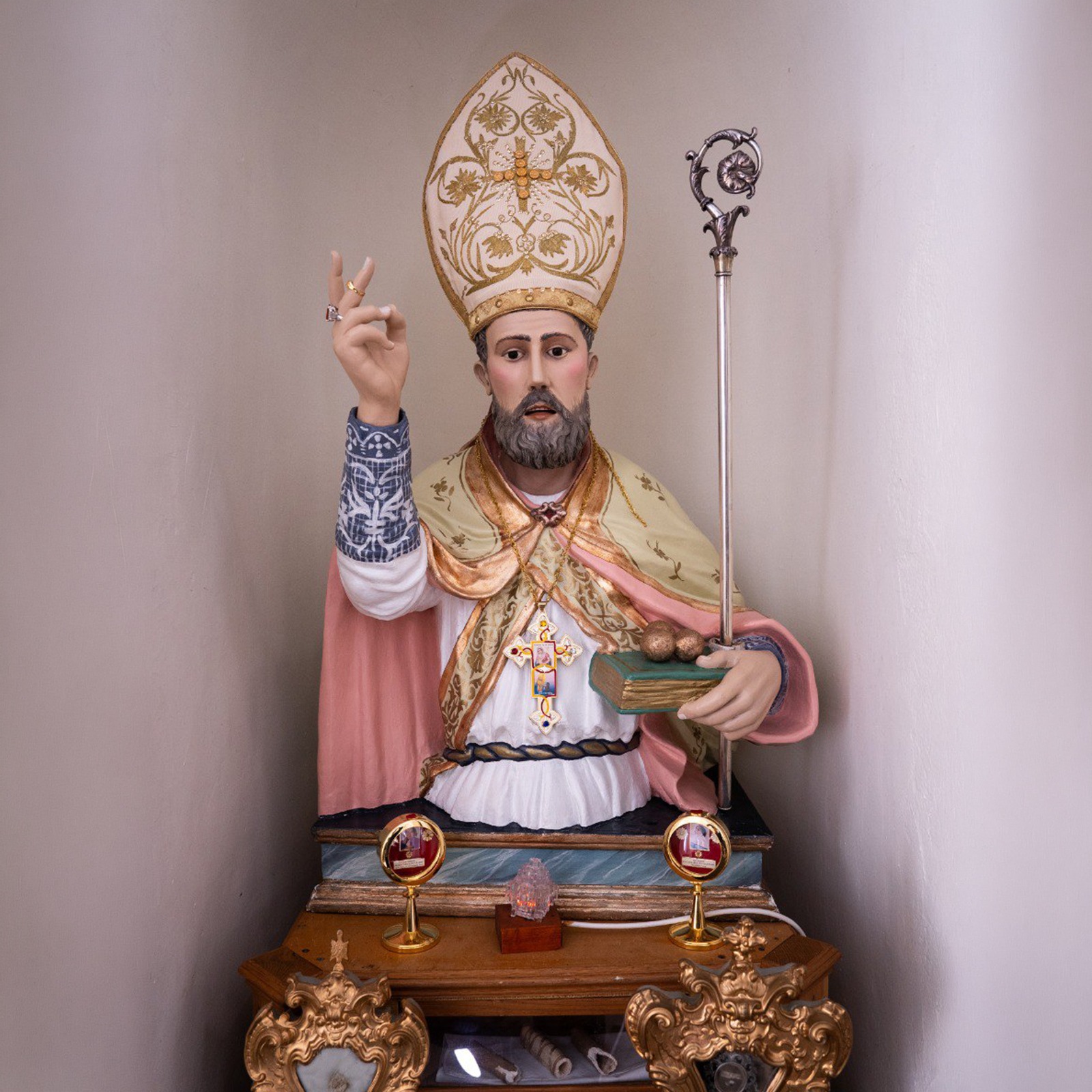
Located in the heart of the historic centre, Sellia's Mother Church—dedicated to Saint Nicholas of Bari, the village's patron saint—is the oldest place of worship among those currently existing within the municipality. Initially consecrated to the Immaculate Virgin and the seat of the confraternity dedicated to Her, the building dates back to the sixteenth century.
The original structure follows the architectural type of the Romanesque period. Over the centuries, however, the building was gradually adapted to the stylistic changes of different eras, undergoing substantial reconstruction and extension work during the eighteenth and nineteenth centuries, with the consequent addition of Neoclassical and eclectic elements.
Externally, the church has a linear architectural design with a two-salient façade, preceded by a large churchyard reached by a flight of steps.
The main elevation is marked by four pilasters framing the central solid-wood portal, above which a moulded cornice supports the pediment of the gabled roof. The main door is surmounted by a decorated artistic stained-glass window depicting Saint Nicholas giving a blessing, while two smaller portals, also made of wood and topped by segmental arches, open on either side. A memorial plaque dedicated to those who fell in the First World War is placed on the left side of the façade.
On the right stands the square bell tower, built following later extensions to the structure. The bell tower is distinguished by swallow-tailed Ghibelline battlements and houses three historic bells bearing the dates 1619, 1800 and 1883, restored respectively in 1965 and 2000.
The interior, characterised by refined stucco decoration, friezes and paintings, is arranged in three aisles connected by a system of arches:
The apse area is flanked by two side rooms used as a sacristy and service rooms. The presbytery also underwent a liturgical adaptation in the 1990s.
Among the artistic works preserved inside the church, a sixteenth-century marble sculpture depicting the Pietà stands out for its historical and critical importance. Examined by art historians including Alfonso Frangipane, the statue has been attributed either to the Florentine sculptor Giovanni Angelo Montorsoli or to the circle of Michelangelo Buonarroti.
Today, the Church of Saint Nicholas of Bari is the principal point of reference for the religious, architectural and collective memory of the Sellia community.
Located in the heart of Sellia's historic centre, the Church of Saint Nicholas of Bari is the village's main religious building and is dedicated to the community's patron saint. It is one of the oldest places of worship within the municipality.
Local tradition and documentation attest that the church was originally dedicated to the Immaculate Conception and was the seat of the confraternity of the same name. Probably medieval in origin, the building assumed its present configuration from the sixteenth century onwards through successive extensions and transformations. While retaining evident features attributable to its Romanesque layout, over the centuries the church underwent further renovation and adaptation work that gradually defined its current architectural appearance.
The façade has a simple design, with a gabled roof and a large churchyard leading to the main entrance by a flight of steps.
On the right side of the building stands the square bell tower, constructed at a later stage than the church's original core. It contains three historic bells bearing the dates 1619, 1800 and 1883; the restoration of the bell dated 1800, carried out in the year 2000, is documented.
The interior is divided into three aisles, separated by arches resting on pillars. Its decorative scheme includes stuccoes, friezes and paintings that bear witness to the transformations the building has undergone over the centuries.
A painting depicting the Immaculate Conception surrounded by angels is located in the central nave, while altars and devotional works from different periods are arranged along the side aisles.
The presbytery is flanked by the sacristy and service rooms and was subject to liturgical adaptation following the reforms of the Second Vatican Council.
Among the church's most valuable works is a sixteenth-century marble Pietà, considered one of the most important artistic artefacts in the Sellia area.
Alfonso Frangipane attributed the Pietà to a sculptor from Michelangelo's circle, while local tradition also mentions Giovanni Angelo Montorsoli because of its stylistic affinities with Michelangelo's sculpture. The work is significant evidence of the spread of Florentine Renaissance models in southern Italy and represents one of the church's main points of historical and artistic interest.
Over the centuries, the Church of Saint Nicholas of Bari has represented the principal centre of the religious and social life of the Sellia community. It remains an important point of reference for liturgical celebrations and preserves a significant historical, artistic and devotional heritage, contributing to the conservation of the village's cultural identity.
chiesa di san nicola inglese