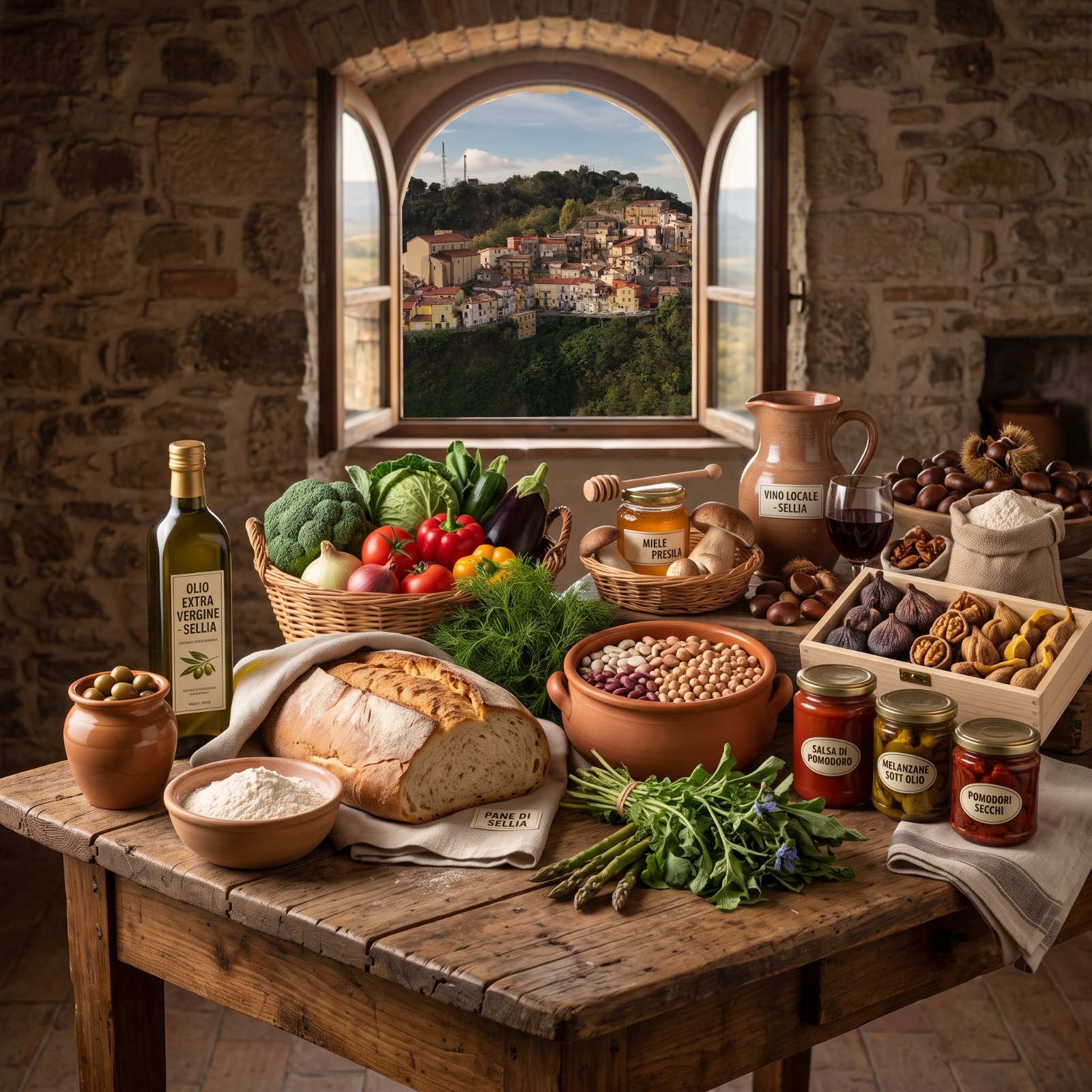
Local cuisine and products of the land
Sellia's culinary tradition is a significant reflection of the village's economic and social history. As in most settlements of the Presila area around Catanzaro, traditional food developed in a context characterised by a predominantly agricultural and pastoral economy, in which production was intended mainly for family self-consumption and trade was limited. The result was an essential cuisine, closely tied to the seasonal availability of local resources and based on the principle of using every part of food, a distinctive feature of Calabrian rural culture.
Products of the land of Sellia
Sellia's gastronomic identity is the result of the centuries-old interaction between people and the environment of the Presila area around Catanzaro. The geomorphological characteristics of the territory, situated between the inland hills and the first mountain foothills, favoured a diversified agricultural economy in which each crop contributed to the food self-sufficiency of farming families.
Olive oil. It was the territory's main agricultural product and the cornerstone of the local diet. In addition to domestic consumption, oil represented a significant economic resource, as shown by the old oil mills in the historic centre. It was used both as a condiment and to preserve vegetables and other foods.
Bread. Made with soft- and durum-wheat flour from grain grown in the surrounding countryside, it was the staple food of the daily diet. Bread was baked periodically in domestic or communal ovens and accompanied almost every dish.
Pulses. Beans, chickpeas and broad beans were among the main sources of plant protein. Stored after harvesting, they provided sustenance during the winter and were eaten in broths and soups or as a side dish.
Vegetables and wild herbs. Family gardens supplied cabbage, broccoli, escarole, onions, tomatoes, peppers and aubergines, while the countryside offered chicory, borage, wild fennel, asparagus and numerous aromatic herbs that enriched traditional cuisine.
Chestnuts. For centuries, the chestnut woods of the Presila were a food resource of primary importance. Chestnuts were eaten fresh or dried, or ground into flour, which was used especially during periods when cereals were scarce.
Figs. Widespread in the Sellia countryside, they were one of the main fruits intended for drying. Preserved throughout the year, they were eaten plain or filled with walnuts and citrus peel to prepare traditional Christmas crucetti.
Vines and wine. Although winegrowing was not a specialised form of production, almost every family had a small vineyard for domestic consumption. Wine accompanied daily meals and had important social and ritual value.
Honey. The presence of rich wild vegetation favoured family beekeeping, which produced honey used both as food and in the preparation of certain traditional sweets.
Woodland mushrooms. The Presila woods offered numerous species of mushrooms gathered during the autumn. They were a valuable addition to the rural diet and remain one of the characteristic elements of the area's cuisine.
Home preserves. The summer preparation of tomato sauce, olives in brine, aubergines, peppers and sun-dried tomatoes in oil was an essential practice in the household economy. Preserves made garden produce available throughout the year, according to a food model based on seasonality and self-production.
Local cuisine
Until the middle of the twentieth century, olive, vine, cereal and chestnut cultivation, together with family vegetable gardens and small domestic livestock holdings, formed the basis of Sellia's rural economy. This production system guaranteed families almost complete food self-sufficiency and determined the very rhythm of daily life, marked by agricultural work and the seasons.
Olive growing held a particularly important position. Extra virgin olive oil was the principal condiment in local cuisine and was also used to preserve food. Its economic importance is demonstrated by the presence in the historic centre of an old oil mill dating from the first decades of the nineteenth century. Now restored and used as a museum of rural civilisation, it effectively documents the role played by oil production in the village's history.
Alongside the olive groves, chestnut cultivation was a valuable food and economic resource. Chestnuts were eaten fresh or dried in traditional rural drying houses and used throughout the year; in times of particular economic hardship, they were a fundamental supplement to the rural diet, as documented in many areas of the Presila.
Cereal growing ensured the production of wheat for domestic bread-making and homemade pasta. Traditional specialities include 'mparrettati, made by shaping the dough with a thin metal rod and generally served with pork ragù or simple tomato sauces. Bread, baked periodically in communal or domestic ovens, was the staple food of the rural table and accompanied almost every dish.
Family gardens guaranteed a continuous supply of vegetables and pulses. Cabbage, broccoli, escarole, chicory, borage, broad beans, chickpeas and beans were the main ingredients in broths and soups that formed the population's daily nourishment. The diet was also supplemented by gathering wild herbs, mushrooms, wild asparagus and aromatic plants from the surrounding woods and countryside, a practice that reflects the deep relationship between the community and the natural environment.
Family livestock provided milk, cheeses, ricotta and meat, consumed mainly on festive occasions. Pigs occupied a central position in the household economy; slaughtering them was an important social occasion and ensured a supply of meat and cured meats for many months. Processing yielded sausages, capocollo, soppressata and ham, while less prized parts were put to use in traditional preparations including frittule, made by boiling meat and pork rind for a long time. Blood sausage belonged to the same tradition but has now almost completely disappeared following changes in health and hygiene regulations.
A distinctive element of local cuisine is the extensive use of chilli pepper, used fresh, dried or preserved in oil, alongside the many home preserves—tomato sauce, olives in brine, aubergines, peppers and sun-dried tomatoes—which made it possible to eat produce harvested in summer during the winter.
Sweet-making was closely linked to the liturgical calendar and the main religious festivals. Crispelli, turdilli and crucetti were prepared at Christmas, while Easter was marked by the preparation of traditional cuzzupi, or cuzzupe, leavened dough sweets decorated with hard-boiled eggs, a symbol of the Resurrection in the Christian tradition. Preparing these sweets was an occasion for family participation and for passing culinary knowledge from one generation to the next.
Sellia's traditional cuisine is distinguished not so much by the existence of unique recipes as by its ability to make the most of the resources offered by the territory and the rural economy of the Presila area around Catanzaro. It remains significant evidence of local material culture, in which food, agricultural work, community practices and collective identity were inseparable aspects of daily life for centuries.
Historical and bibliographical note
The historical framework of Sellia's traditional cuisine is supported by studies of rural civilisation and food in Calabria, which highlight the relationship between agricultural production, economic organisation and food practices. For further information, see, among others: G. Valente, Dizionario dei luoghi della Calabria; V. Teti, Il colore del cibo. Geografia, mito e realtà dell'alimentazione mediterranea; P. Bevilacqua, Breve storia dell'Italia meridionale; as well as the historical and institutional documentation of the Municipality of Sellia relating to the historic oil mill and the culture of rural civilisation.
Gallery