
tradizioni inglese
0:001:46
Sellia's local traditions are the most authentic reflection of its people. Deeply rooted in the village's historical and religious memory, these customs come together in community events of rare evocative power, whose highlights coincide with the Easter cycle, the summer season and the Christmas festivities.
Holy Week above all reveals the community's most intense soul. The entire ritual of these days is permeated by an imposing drama of death and rebirth, in which the sacred is intertwined with archaic gestures and symbols.
On Maundy Thursday, the Altar of Repose, commonly known as the “Sepulchre”, is solemnly prepared inside the Mother Church. In accordance with liturgical practice, at the end of the celebration the parish priest places the consecrated hosts in the left aisle, by the altar of the Immaculate Conception. The space is decorated with drapes, candles and the characteristic “piattelli”: small dishes of pulses and cereals germinated in darkness. The seedlings' pale colour, caused by the absence of chlorophyll, alludes to the deprivation of life and evokes the mystery of the tomb awaiting the Resurrection. During the night, the village women keep vigil over the place of reservation, singing ancient funeral laments of profound expressive intensity.
From Maundy Thursday to Holy Saturday, the community experiences a suspended period of mourning. The bells fall silent, the tabernacle remains empty and the high altar is stripped. The hours of religious services are marked by the toppita, a wooden instrument with an iron striker whose dull sound contrasts with the festivity of bronze bells. Along the village streets, trumpet and drum resound, alternating rhythms of mourning with calls of hope.
On Good Friday, the night-time Way of the Cross winds by torchlight through the historic centre, accompanied by the statues of Our Lady of Sorrows, Ecce Homo and the Naca. The memory of Calvary also comes to life in the living procession, which culminates in Mary's moving lament in the churchyard of the parish church; in the past, an elderly devotee from the village walked barefoot through the streets carrying a heavy cross on his shoulder.
Every four years, the whole of Good Friday becomes the stage for the Opera Sacra. It is a majestic theatrical performance in twenty acts and a prologue, based on an 1886 text handed down from generation to generation and interpreted with extraordinary involvement by the local residents themselves.
Sellia's historical memory preserves the recollection of moving ceremonies that have now disappeared. These included the Trasuta on Maundy Thursday in the Church of Saint Nicholas of Bari: at the end of a sermon in five parts, a Lenten preacher removed a small articulated Crucifix from the cross and symbolically handed it to the Virgin. At the preacher's call, the statue of Our Lady of Sorrows ran into the church and took Her Son in her arms amid the emotion of the faithful.
On Good Friday afternoon, the Church of the Most Holy Rosary instead hosted the “Three Hours of Agony”. The altar was arranged in the form of Calvary, with the Crucifix and statues of the Passion at its centre. For three hours, the preacher recalled the final stages of Christ's life, using emphatic tones and powerful representations intended to stir the congregation's conscience.
The mourning of the Passion dissolves on Easter night with the Cunfrunta. The meeting between the Risen Christ and His Mother takes place along the central nave of the Mother Church: the bearers run the two statues towards each other until, at the moment of reunion, the Virgin's black cloak is removed to reveal a starry sky-blue robe, amid festive pealing and songs of jubilation.
The Easter rites end with the Tummulieri, an expression derived from the Latin Tu in mulieribus. On this occasion, two groups of worshippers process through the historic centre singing the Rosary in archaic popular Latin. The route is accompanied by torches, firecrackers and mortars; in the past, blank shots were even fired with cartridges prepared locally by the faithful, combining the spirit of celebration with an ancient apotropaic purpose intended to drive away evil forces.
While spring is marked by Easter devotion, summer and autumn intertwine the religious dimension with the territory's resources and culture.
On 5 August, Sellia celebrates the feast of Our Lady of the Snow, while on 17 August the community hosts the Olive Oil Festival. Intended to promote the area's main agricultural resource, the event attracts numerous visitors every year for tastings of typical local products.
On the first Sunday in October, solemn celebrations are held in honour of Our Lady of the Rosary, to whom the townspeople have shown centuries-old devotion. In the late afternoon, the statue of the Madonna is carried in procession through the village streets, ending at the Church of the Most Holy Rosary.
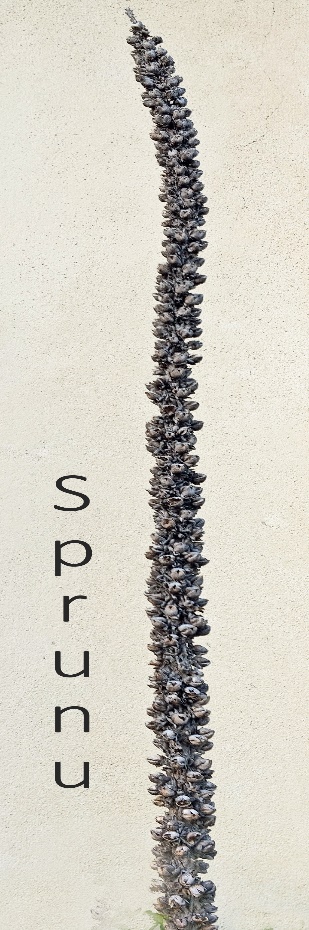
A now-vanished autumn rite took place on the last Friday in October, before the beginning of the seven Saturdays preceding the Immaculate Conception. During the procession of the picture of the statue of the Virgin, the village children lit the route with special torches made from wild plants known as sproni, dried and soaked in murga, the thick residue of olive oil.
On 6 December, Sellia celebrates its patron saint, Saint Nicholas of Bari. The statue of the Saint travels through the village streets accompanied by traditional songs and the band, concluding the solemnity with Mass and fireworks.
The Christmas season is distinguished by an atmosphere of intimate and intense participation. Christmas Eve dinner brings families together around the values of affection and memory, while nativity scenes made with local moss and cork take shape in homes and in the church.
On the night of 24 December, at the end of Midnight Mass, the faithful gather in the square in front of the Mother Church around a large bonfire, a symbol of light and rebirth. The festivities continue until Epiphany with the procession of the Infant Jesus on 6 January and the custom of the strina: festive groups make their way through the village streets late at night, carrying songs of good wishes from house to house in exchange for the owners' welcome and hospitality.
tradizioni inglese
 1 / 4
1 / 4